

It's Never Too Late to Rebuild: Returning to Exercise After Having Kids. Where to Start?
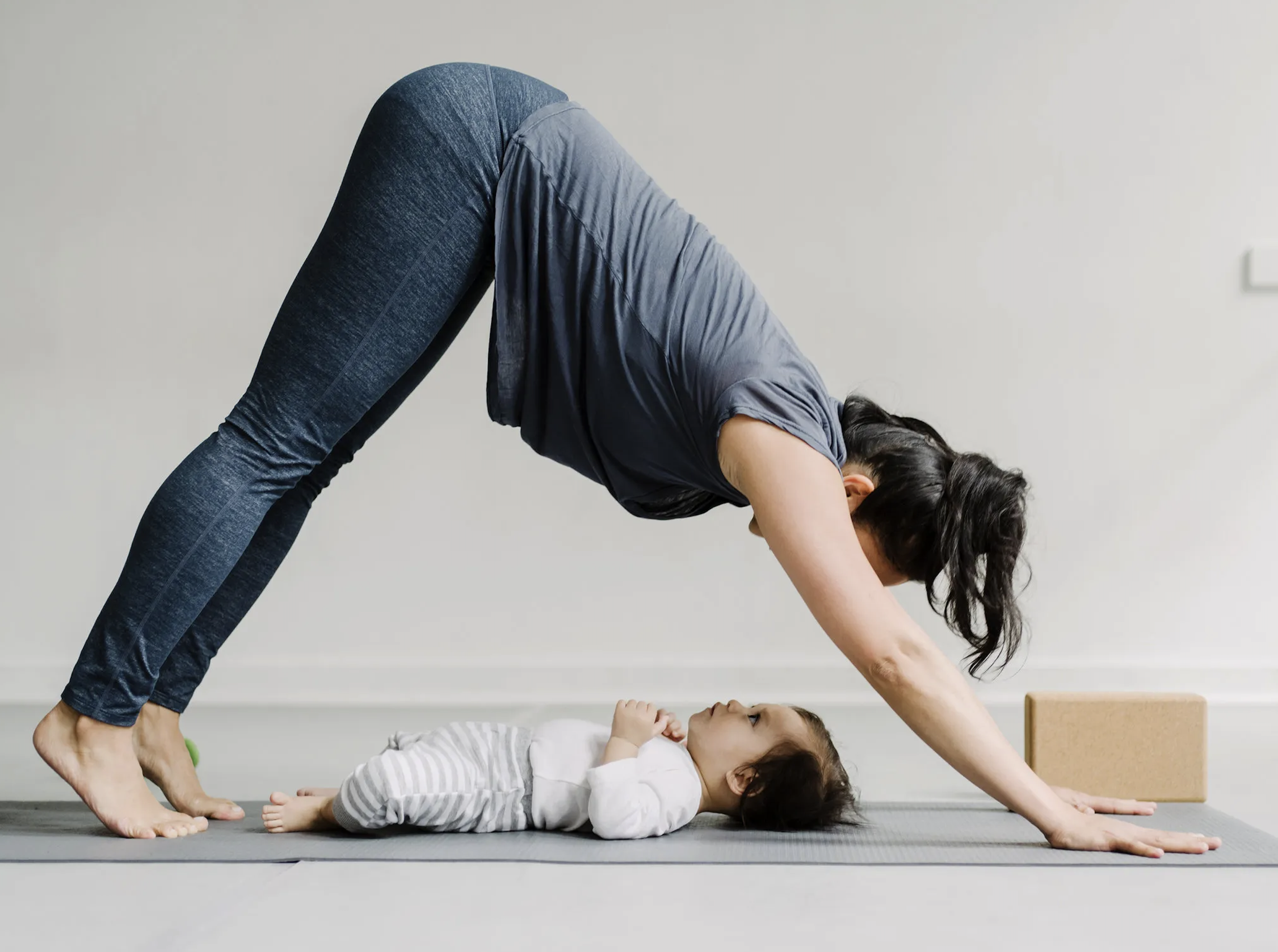
"I've finally got the all-clear to exercise… but honestly, I don't know where to start."
It's something we hear from mums all the time.
For some women, that moment comes six weeks after giving birth.
For others, it's six months.
Sometimes it's six years later.
Life gets busy.
Children grow.
Work resumes.
Sleep slowly improves.
Eventually there's a moment where you decide:
"I think I'm ready to get back to looking after me."
Maybe that's joining a gym.
Starting Pilates.
Returning to netball.
Running your first 5 km.
Or simply wanting to lift your children without your back aching afterwards.
Whatever your goal looks like, there's something incredibly important to understand.
Your body is not broken.
But it is different.
Pregnancy changed your body in remarkable ways.
Now it needs the opportunity to adapt once again.
Your Body Spent Nine Months Changing
During pregnancy your body wasn't simply carrying extra weight.
It was constantly adapting.
Your growing baby changed:
Your posture
Your centre of gravity
Your breathing
Your rib cage
Your abdominal muscles
Your pelvic floor
Your spinal loading
The way you walked
The way your muscles worked together
Every single day your nervous system was learning new movement patterns.
Your body became incredibly good at supporting pregnancy.
Now it needs to learn how to support life after pregnancy.
That's a very different job.
Six Weeks Is A Milestone… Not A Finish Line
One of the biggest misconceptions we hear is:
"My doctor said I'm cleared to exercise."
Being medically cleared is wonderful.
It means your body has healed enough to begin increasing activity.
It doesn't necessarily mean every muscle has regained its previous strength, endurance or coordination.
Think about spraining your ankle.
Even after the swelling settles, you wouldn't immediately expect to run a marathon.
You'd gradually rebuild strength, balance and confidence.
The postnatal body deserves the same patience.
Exercise Isn't Just About Muscles
One of the things we love educating mums about is that returning to exercise isn't simply about getting stronger.
It's about helping your whole body work together again.
At Langwarrin Family Chiropractic, we often explain that movement is a conversation between your brain and your body.
Every movement you make relies on information travelling between your joints, muscles and nervous system.
Your brain is constantly asking questions like:
"Where is my pelvis?"
"Is my spine stable enough to lift my toddler?"
"Can I safely squat down?"
"How much support do I need before I pick up the pram?"
The quality of those answers depends on how well your body is moving.
Healthy joints don't simply allow movement.
They also provide important information that helps your brain coordinate muscles efficiently.
If areas such as your pelvis, lower back, hips or rib cage aren't moving particularly well after pregnancy, your body may begin compensating with other muscles instead.
Sometimes that's when mums begin noticing:
Persistent lower back pain
Tight hips
Neck and shoulder tension
Feeling unstable
Difficulty reconnecting with their core
Fatigue during exercise
This is one reason we assess movement before prescribing rehabilitation exercises.
Sometimes improving how your body moves can make it easier for your brain and muscles to work together again.
Your Deep Core Is Your Foundation
Many mums have heard they need to "strengthen their core."
But your deep core is much more than your abdominal muscles.
It includes:
Your diaphragm
Your pelvic floor
Your deep abdominal muscles
The small stabilising muscles around your spine
These muscles work together every time you:
Stand up
Pick up your baby
Push a pram
Carry groceries
Climb stairs
Exercise
The goal isn't simply making these muscles stronger.
It's helping them work together again.
Think of an orchestra.
Every instrument may be capable of playing beautifully.
But if they aren't working together, the music doesn't sound right.
Your deep core works exactly the same way.
Good coordination comes before powerful movement.
That's why breathing, posture, spinal movement and pelvic control all matter.
They're all part of the same system.
Why We Often Work Alongside Pelvic Floor Physiotherapists
One of the most valuable members of a postnatal healthcare team is a pelvic floor physiotherapist.
They have specialised training in assessing the pelvic floor and abdominal wall and can identify areas that may benefit from targeted rehabilitation.
At Langwarrin Family Chiropractic, we frequently encourage women to see a pelvic floor physiotherapist, particularly if they're returning to higher-impact exercise or experiencing symptoms that don't feel quite right.
While they focus on the function of the pelvic floor and abdominal wall, we assess how the rest of the body is moving.
That includes looking at:
Spinal movement
Pelvic movement
Hip mobility
Rib cage movement
Posture
Breathing patterns
Functional movement
Where appropriate, chiropractic adjustments may be used to help improve joint movement. Combined with rehabilitation exercises prescribed by your chiropractor or pelvic floor physiotherapist, this can help create a better environment for rebuilding efficient movement and confidence as you return to exercise.
Rather than working in isolation, these approaches often complement each other as part of a broader rehabilitation journey.
Returning To Exercise: Build, Don't Rush
It's completely understandable to want to get back to doing the things you love.
For some mums that's running.
For others it's CrossFit, Pilates, yoga, netball, tennis, weight training or simply having enough energy to keep up with the kids.
The temptation is often to jump back into the workouts you enjoyed before pregnancy.
But here's something worth remembering:
Your body isn't starting from where it left off, it has adapted.
Just as your body gradually changed over nine months, it deserves the opportunity to gradually adapt again.
One of the biggest gifts you can give yourself isn't pushing harder.
It's progressing smarter.
At Langwarrin Family Chiropractic, we often say:
"Don't ask your body to do tomorrow's job today."
Instead, create a solid foundation first.
Think Foundations Before Fitness
Imagine building a house.
You wouldn't install the roof before pouring the slab.
You'd make sure the foundations were stable before adding more weight.
Your body works in much the same way.
Before returning to higher-impact exercise, it's worth asking:
Can I breathe well during movement?
Can I control my pelvis when I squat?
Can I balance comfortably on one leg?
Can I lift my child without my back taking over?
Can I move through my hips instead of my lower back?
These are all signs that your body is rebuilding the stability it needs before asking it to produce more strength or power.
Sometimes, it's not about getting stronger.
It's about improving the quality of how you move.
Your Body Will Usually Tell You When Something Needs Attention
One of the most reassuring things we tell mums is this:
Your body is very good at giving you feedback.
Rather than trying to "push through," it's worth paying attention to what your body is telling you.
Some muscle fatigue after exercise is normal.
Feeling challenged is normal.
But some symptoms deserve a little more attention.
Green Lights ✅
These signs generally suggest your body is coping well with your current level of activity:
Mild muscle fatigue that settles within a day or two
Feeling stronger over time
Improved confidence with movement
Exercises becoming easier to perform
No increase in pelvic or lower back symptoms
Feeling stable during daily activities
These are encouraging signs that your body is adapting positively.
Amber Lights ⚠️
These symptoms don't necessarily mean you need to stop exercising but they do suggest it's worth modifying your program or seeking some guidance.
You may notice:
Persistent lower back tightness after exercise
Hip pain that continues into the next day
Neck or shoulder tension increasing
Difficulty feeling your core working
One side of your body doing more work than the other
Exercises feeling awkward rather than challenging
Needing to hold your breath during lifts
These are often signs that your body is compensating rather than moving efficiently.
Sometimes small changes in technique, breathing, movement quality or exercise selection can make a significant difference.
Red Lights 🚩
These are symptoms that shouldn't simply be ignored.
If you experience any of the following while exercising or afterwards, it's worth speaking with a pelvic floor physiotherapist and your healthcare provider before progressing further.
These may include:
Urinary leakage
Pelvic heaviness or a dragging sensation
A feeling of pressure through the vagina
Abdominal doming or coning
Significant pelvic pain
Ongoing lower back pain that worsens with exercise
Pain around a Caesarean scar
Feeling unstable during everyday movements
These symptoms don't necessarily mean you've caused damage.
However, they are your body's way of asking for a closer assessment so your rehabilitation can be tailored to your individual needs.
Why Movement Quality Matters More Than Exercise Quantity
When mums return to exercise, many naturally focus on:
How many kilometres can I run?
How much weight can I lift?
How many classes can I fit into the week?
While these goals are exciting, we often encourage people to ask a different question first:
"How well am I moving?"
Your brain doesn't just measure strength.
It also monitors:
Balance
Coordination
Breathing
Joint movement
Muscle timing
Stability
If these areas are working well together, your body is generally better equipped to handle increasing physical demands.
If they're not, larger muscles often compensate, which may contribute to unnecessary strain through the lower back, hips or shoulders.
Why We Assess More Than Just Your Pain
Many people are surprised that during a chiropractic assessment we don't only look at the area that's sore.
For example, if someone has lower back pain after returning to exercise, we'll often assess:
How well the hips are moving
Pelvic movement
Rib cage mobility
Thoracic spine movement
Breathing mechanics
Balance
Functional movement patterns
Core control during simple movements
Why?
Because the body works as one connected system.
A stiff rib cage may influence breathing.
Reduced hip movement may place extra demand on the lower back.
Changes in pelvic movement may alter how your deep core coordinates.
By understanding how your whole body moves, we can better identify the factors that may be contributing to your symptoms.
Where appropriate, chiropractic adjustments may be used to improve joint movement, while rehabilitation exercises help your body learn how to use that movement more efficiently.
Neither replaces the other.
They work together.
You Don't Have To Figure It Out Alone
Returning to exercise after having a baby can feel overwhelming.
Social media often shows mums lifting heavy weights or running long distances just weeks after giving birth.
What it doesn't always show is the gradual work that helped them get there.
Every mum's journey is different.
Whether your baby is six weeks old or six years old, your body deserves an individual approach.
There is no prize for rushing.
The goal isn't to get back to where you were.
The goal is to build a body that's even more resilient for the years ahead.
Because motherhood places physical demands on your body every single day and your body deserves the support it needs to keep up.
Five Foundational Exercises To Help Reconnect With Your Body
If you're returning to exercise after having a baby, it's easy to think you need to jump straight into crunches, planks or high-intensity workouts.
In reality, your body will often benefit more from reconnecting with the basics first.
These exercises aren't designed to leave you exhausted.
They're designed to improve coordination, breathing, stability and confidence. Creating a strong foundation before progressing to more demanding activities.
Remember, quality is always more important than quantity.
1. Diaphragmatic Breathing
Breathing may seem like a strange place to start, but your diaphragm is one of the four key muscles of your deep core.
Learning to breathe well creates the foundation for everything else.
How To Perform
Lie comfortably on your back with your knees bent.
Place one hand on your chest and one on your lower ribs.
Slowly breathe in through your nose.
Feel your lower ribs gently expand sideways and your abdomen rise naturally.
Slowly breathe out through your mouth.
Let your body relax before taking the next breath.
Aim for: 5–10 slow breaths, two to three times each day.
You Should Feel
✔ Gentle movement through your lower ribs.
✔ Relaxed shoulders and neck.
✔ Calm, controlled breathing.
Watch Out For
✘ Your shoulders lifting.
✘ Breathing only into your chest.
✘ Holding your breath.
✘ Tension through your neck or jaw.
2. Pelvic Tilts
This gentle movement helps reconnect your pelvis and lower back while improving awareness of how they move together.
How To Perform
Lie on your back with your knees bent.
Gently rock your pelvis forwards and backwards.
Think about slowly moving your lower back towards the floor and then away again.
Keep the movement smooth and comfortable.
Repeat 10–15 times.
Why It Helps
Improves awareness of pelvic movement and begins restoring comfortable movement through the lower back.
Watch Out For
✘ Forcing the movement.
✘ Holding your breath.
✘ Using your legs to create the movement.
3. Gentle Abdominal Brace
Rather than sucking your tummy in, think about gently wrapping your abdomen around your spine.
How To Perform
Breathe normally.
Imagine gently tightening a belt around your waist.
Lightly engage your lower abdomen.
Hold for 5–10 seconds while continuing to breathe.
Repeat 10 times.
You Should Feel
✔ Gentle tension around your lower abdomen.
✔ Normal breathing.
Watch Out For
✘ Holding your breath.
✘ Pulling your tummy in as hard as possible.
✘ Tightening your buttocks.
✘ Feeling downward pressure into your pelvis.
4. Heel Slides
Now it's time to teach your body to maintain stability while your legs move.
How To Perform
Lightly engage your deep core.
Slowly slide one heel away.
Pause.
Return slowly.
Alternate sides.
Aim for 10 repetitions each side.
You Should Feel
✔ Your trunk staying still.
✔ Smooth, controlled movement.
Watch Out For
✘ Pelvis rocking.
✘ Lower back arching.
✘ Losing control as your leg extends.
5. Glute Bridges
Strong glutes work together with your deep core to support your pelvis and lower back.
How To Perform
Lie on your back.
Gently engage your core.
Push through your heels.
Lift your hips.
Pause briefly.
Slowly lower.
Aim for 10–15 repetitions.
You Should Feel
✔ Your glutes doing most of the work.
✔ Your hips lifting evenly.
Watch Out For
✘ Cramping hamstrings.
✘ Arching through your back.
✘ Rushing the movement.
Why Are These Exercises So Simple?
If you've reached this section and thought, "These exercises seem a bit too easy," you're not alone!
There's a very good reason we've started with the basics.
Returning to exercise after pregnancy, be it 6 weeks later or 6 years later, isn't about jumping straight into the hardest workout you can manage, it's about rebuilding strong foundations first.
These exercises are designed to help you reconnect with your breathing, deep core, pelvis and movement patterns before progressing to more challenging strength and fitness exercises. Think of them as teaching your body to move well again, rather than simply asking it to work harder.
At Langwarrin Family Chiropractic, we believe quality of movement comes before quantity of movement. Once you can perform these exercises with good control, normal breathing and confidence (without symptoms) it may be appropriate to progress to more advanced exercises that further challenge your strength, balance and coordination.
That progression looks different for everyone. Some people are ready within a few weeks, while others benefit from spending more time building a solid foundation first. There is no "right" timeline, only the one that's right for your body.
If you're unsure whether you're ready to progress, we'd love to help. During an assessment, we can evaluate how your spine, pelvis, breathing, posture and deep core are working together and guide you safely through the next stage of your rehabilitation, introducing more advanced exercises when your body is ready.
Remember, the goal isn't simply to exercise more, it's to move better, build resilience and create a body that supports you for the years ahead.
A Gentle Reminder...
Your body has already done something extraordinary.
It grew, carried and delivered a baby.
Now it deserves time to adapt once again.
Recovery isn't about proving how quickly you can get back to where you were.
It's about creating a body that supports you for the next season of life.
Whether that's carrying toddlers, chasing children around the park, returning to team sport or simply feeling confident moving again.
When Should You Reach Out For Help?
While many mums progress beautifully with gradual exercise, there are times when additional support can make a significant difference.
We encourage you to seek an assessment if you notice:
Persistent lower back pain.
Ongoing pelvic pain.
Urinary leakage during exercise.
Pelvic heaviness or pressure.
Abdominal doming or coning.
Pain around your Caesarean scar.
Difficulty reconnecting with your core.
Feeling unstable while lifting your child.
Symptoms that continue getting worse instead of better.
These symptoms don't necessarily mean something serious has happened.
However, they are your body's way of asking for a closer look.
Why We Often Recommend A Team Approach
At Langwarrin Family Chiropractic, we believe the best outcomes often come from healthcare professionals working together.
That's why we frequently work alongside pelvic floor physiotherapists.
A pelvic floor physiotherapist has specialised training in assessing the pelvic floor and abdominal wall, helping guide rehabilitation when those areas require additional attention.
At the same time, we assess how your entire body is moving.
This includes:
Your posture.
Your spinal movement.
Your pelvis.
Your rib cage.
Your hips.
Your breathing mechanics.
Your balance.
Your movement patterns.
Where appropriate, chiropractic adjustments may be used to improve joint movement, helping create a better environment for your nervous system to coordinate efficient movement.
When combined with targeted rehabilitation exercises, this whole-body approach aims to help you move with greater confidence, improve movement quality and support your return to the activities you love.
You Don't Need To "Bounce Back"
One of the phrases we dislike most is:
"Bounce back."
Motherhood changes you.
Not just physically, but emotionally, mentally and neurologically.
The goal isn't to become the person you were before pregnancy.
The goal is to become strong, confident and resilient in the body you have now.
Your body adapted brilliantly to grow your baby.
With the right guidance, movement and rehabilitation, it can continue adapting for everything that comes next.
Ready To Start Your Journey?
Whether you're six weeks postpartum or your youngest child has just started school, it's never too early or too late to reconnect with your body.
If you're unsure where to start, our team at Langwarrin Family Chiropractic can assess how your spine, pelvis, breathing, posture and movement patterns are working together and guide you through the next stage of your recovery.
And if we believe a pelvic floor physiotherapist should be part of your care, we'll happily work alongside them to ensure you receive the support you need.
Because every mum deserves to feel strong, supported and confident in her body again.
A Thought To Take With You
Pregnancy asked your body to adapt for nine months.
Motherhood asks it to keep adapting every single day.
Give yourself permission to rebuild gradually.
Celebrate what your body can do today, not what it used to do.
Strong foundations aren't built overnight but they can support you for a lifetime.