

Golf Better. Move Better. Stay in the Game Longer.
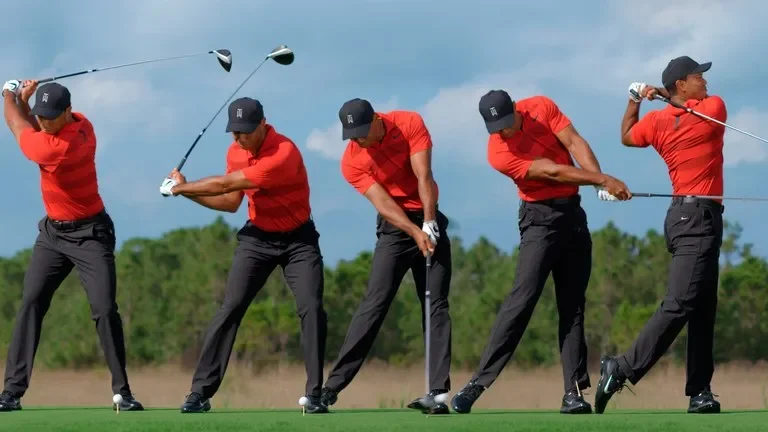
Why Building a Better Body Starts Long Before You Reach the First Tee
Most golfers spend hundreds, or even thousands, of dollars on clubs, shoes, rangefinders and lessons in the pursuit of a better game.
We upgrade our driver.
We replace our grips.
We buy new golf shoes.
We pay for lessons.
We spend hours practising our swing.
But there's one piece of golfing equipment that's often overlooked...
The body that swings the club.
Whether you play every weekend, enjoy the occasional social round or are chasing a lower handicap, your body is the one piece of equipment you'll use every single game for the rest of your life.
The better your body moves, the better opportunity it has to perform the way it was designed to.
But here's something many golfers never consider...
Your body doesn't know you're playing golf.
Your Body Doesn't Know You're Playing Golf
It might sound like a strange thing to say, but it's true.
Your body doesn't recognise a golf course.
It doesn't know you're standing on the first tee.
It only knows one thing...
The movement you're asking it to perform.
For most social golfers, that movement comes after an entire week of life.
Maybe you've spent forty hours sitting behind a desk.
Perhaps you've driven from meeting to meeting.
Maybe you're a tradie who's spent the week climbing ladders, lifting heavy materials, crawling through roof spaces or working overhead.
Perhaps you're retired and have spent the week gardening, walking the dog or looking after the grandchildren.
Whatever your week has looked like, your body has already been adapting to those demands long before you pick up a golf club.
Then Saturday morning arrives...
And we suddenly ask our body to produce one of the fastest, most coordinated rotational movements in sport.
We ask it to:
Rotate powerfully.
Transfer weight efficiently.
Stay balanced.
Produce force.
Control that force.
Repeat it 70 or 80 times over the course of a round.
It's a little like asking your car to tow a caravan without ever servicing the engine.
Often, the problem isn't golf.
The problem is that the body hasn't been prepared for golf.
Professional Golfers Don't Just Practise Golf
When we watch the professionals, it's easy to admire their effortless swings.
But what we don't see is everything that happens between rounds.
Professional golfers don't simply practise golf.
They prepare their body for golf.
Every week they dedicate time to improving:
Joint mobility
Strength
Balance
Stability
Rotational power
Recovery
Flexibility
Sleep
Nutrition
Movement quality
Many also include healthcare professionals such as strength coaches, physiotherapists, massage therapists and chiropractors as part of their support team.
Why?
Because they understand something that applies to all of us.
Your body can only perform the movement it's prepared to perform.
Looking after their body isn't something they do when they're injured.
It's part of preparing their body to meet the demands they're about to place upon it.
Life Is Your Sport
Most of us aren't professional golfers.
We're parents.
Tradies.
Office workers.
Business owners.
Teachers.
Grandparents.
Retirees.
Our "training" often looks like sitting in traffic, lifting children, working long hours, carrying groceries, mowing lawns or climbing ladders.
Life is our sport.
Golf is simply one of the ways we choose to enjoy it.
That's why, at Langwarrin Family Chiropractic, we don't just ask:
"How's your golf swing?"
We ask:
"How is your body coping with the demands of your life?"
Because the better your body copes with everyday life, the better prepared it is for everything else you enjoy doing.
🏌️ Golf Swing Myth #1
"My back is stiff because I'm getting older."
Age certainly influences how our bodies change over time.
But stiffness isn't simply an unavoidable part of ageing.
The way we move, the positions we spend our day in, previous injuries, strength, recovery and how well our body functions all influence how we move.
Many people notice improvements in the way they move when they consistently invest in mobility, strength, recovery and the overall function of their body.
Growing older doesn't automatically mean moving poorly.
Every Golf Swing Begins in Your Brain
Here's something most golfers have never been taught.
Before your muscles move...
Before your hips rotate...
Before your shoulders turn...
Before the club even starts its backswing...
Your brain has already made thousands of decisions.
How much should you rotate?
How stable are your feet?
Where is your weight?
How much force should your muscles produce?
How quickly should they produce it?
How do you stay balanced throughout the swing?
Your brain answers all of these questions in fractions of a second.
But it can't do it alone.
It relies on information.
Your Joints Are Constantly Talking to Your Brain
Many people think joints simply help us move.
In reality, they do something even more remarkable.
Every joint in your body contains specialised sensory receptors that are constantly sending information to your brain about:
Position.
Movement.
Rotation.
Balance.
Speed.
Force.
Where your body is in space.
This information allows your brain to build a picture of where every part of your body is, even when you're not looking.
It's how you know where your feet are during your swing.
How much you've rotated.
How balanced you are.
How much force to produce.
Without this constant communication, movement becomes much harder to coordinate efficiently.
The Nervous System: Your Body's Master Coordinator
Your muscles don't work in isolation.
They work because your brain tells them when to switch on, how hard to contract and how long to stay active.
Think of your nervous system as the conductor of an orchestra.
Every muscle is an instrument.
Every joint provides feedback to the conductor.
When communication is clear, the orchestra performs beautifully.
When communication becomes less efficient, some instruments begin playing too loudly while others don't contribute enough.
Your body behaves much the same way.
Sometimes the muscles that should be doing the work become less efficient.
Other muscles begin compensating.
Movement becomes harder.
Less efficient.
Sometimes painful.
Sometimes it simply feels like you've "lost your swing."
At Langwarrin Family Chiropractic, we believe a healthy nervous system allows your body to move the way it was designed to.
That's why our focus isn't simply on sore muscles or stiff joints.
It's about helping create the best possible environment for your nervous system to coordinate movement efficiently.
Because healthy movement doesn't begin with stronger muscles.
It begins with healthy communication between your brain and your body.
🏌️ Golf Swing Myth #2
"I just need to stretch more."
Stretching can absolutely be helpful.
But stretching tight muscles doesn't always address why those muscles became tight in the first place.
Sometimes muscles become tight because they're working harder to compensate for movement elsewhere in the body.
Sometimes your body adopts protective movement strategies after injury, prolonged sitting or repetitive work.
That's why improving movement isn't simply about becoming more flexible.
It's about helping your entire movement system, including your joints, muscles and nervous system, work together as efficiently as possible.
Build the Body That Swings the Club
Most golfers spend years improving their golf clubs.
Very few spend the same amount of time improving the body holding those clubs.
At Langwarrin Family Chiropractic, we believe that building a better golfer starts with building a better functioning body.
One that's prepared for the demands of work.
Prepared for family life.
Prepared for retirement.
Prepared for golf.
Because when your body is prepared for life...
Golf simply becomes one of the rewards.
Building a Body That's Ready for Golf
At Langwarrin Family Chiropractic, we believe golf isn't just about having stronger muscles or a smoother swing.
It's about building a body that's capable of producing that swing over and over again.
Every golfer is unique, but we've found there are four key areas that work together to help your body perform at its best:
A healthy nervous system.
Healthy joint function.
Strong, well-coordinated muscles.
Healthy movement habits.
Let's explore how each one contributes to your golf game.
1. Healthy Joint Function – Feeding Your Brain the Right Information
Most people think joints exist simply to create movement.
In reality, they're constantly doing something even more important.
Every joint in your body contains specialised receptors that provide your brain with a continuous stream of information about:
Position
Rotation
Balance
Speed
Direction
Force
Where your body is in space
Think of your joints as thousands of tiny sensors.
Every golf swing depends on those sensors sending accurate information back to your brain.
When joints move well, your brain receives clear information.
When movement becomes restricted, that information may change.
Your brain will always do its best with the information it receives, but if the quality of that information changes, your movement strategy may also change.
Sometimes this simply feels like:
Losing rotation.
Feeling less balanced.
Not generating as much power.
Feeling "stuck" through your swing.
Other times it may contribute to compensation patterns that place extra demand on other parts of the body.
That's why healthy joint movement isn't simply about flexibility.
It's about helping provide the nervous system with the information it needs to coordinate efficient movement.
2. The Thoracic Spine – The Steering Wheel of Your Swing
If there was one region we'd encourage every golfer to pay attention to, it would be the thoracic spine.
This is the middle part of your back where your ribs attach.
It's designed to rotate.
Unfortunately, modern life often encourages the opposite.
Long hours spent:
Sitting at a computer.
Driving.
Looking down at phones.
Working with your arms in front of you.
...can gradually reduce movement through this area.
For golfers, that creates two challenges.
Firstly, it may reduce your ability to rotate comfortably.
Secondly—and perhaps more importantly—it changes the information being sent from this region to your brain.
When movement through the thoracic spine becomes restricted, your nervous system often finds another way to complete the task.
That's when we commonly see the lower back, neck or shoulders begin working harder than they need to.
Healthy movement through the thoracic spine helps your brain coordinate rotation more efficiently while sharing the workload across the body.
Mobility Exercises
Open Books
Thread the Needle
Quadruped Thoracic Rotations
Foam Roller Thoracic Extensions
Aim for 8–10 repetitions each side, several times throughout the week.
Where Chiropractic Fits
One of the key areas we assess in golfers is how well the joints of the thoracic spine are moving.
When appropriate, chiropractic adjustments aim to improve movement through these joints, helping optimise the information being sent to the nervous system.
Combined with regular mobility exercises, this creates a stronger foundation for efficient movement.
🏌️ Golf Swing Myth #3
"My lower back is the problem."
Sometimes it is.
But quite often the lower back is simply doing extra work because another part of the body isn't contributing enough.
If your hips or thoracic spine aren't rotating efficiently, your lower back may compensate to help complete the movement.
At Langwarrin Family Chiropractic, we don't just ask "Where does it hurt?"
We ask:
"Why is this area having to work harder?"
That's why we assess the whole movement system, not just the painful area.
3. Your Hips – The Engine Room of the Golf Swing
Every powerful golf swing starts from the ground.
Your hips play a vital role in loading, rotating, transferring weight and producing force.
But they also perform another important job.
They're constantly providing your brain with information about:
Balance.
Weight transfer.
Pelvic position.
Rotation.
Stability.
This information helps your nervous system coordinate the muscles responsible for producing a smooth, repeatable swing.
If movement through the hips becomes restricted, your brain often creates a different movement strategy.
Many golfers unknowingly begin rotating more through the lower back instead.
Over time, these compensation patterns can increase the workload placed on surrounding joints and muscles.
Mobility Exercises
90/90 Hip Rotations
World's Greatest Stretch
Hip Flexor Stretch
Adductor Rock Backs
Strength Exercises
Goblet Squats
Split Squats
Romanian Deadlifts
Glute Bridges
Where Chiropractic Fits
Your hips, pelvis and lower spine function as one movement system.
Assessing how these joints move together helps us understand whether your body is sharing movement efficiently or asking one area to do more than its fair share.
4. Your Core – More Than Just Strong Abdominals
When people hear the word "core," they often think about six-pack muscles.
For golfers, your core has a much more important role.
It transfers force between your upper and lower body.
But before your core muscles can contract...
Your brain first has to coordinate them.
For that to happen efficiently, it relies on accurate information coming from your spine, pelvis and hips.
Healthy communication between these regions helps your nervous system recruit the right muscles at the right time.
That's one reason why improving core function isn't simply about strengthening muscles.
It's also about helping your body communicate more efficiently.
Great Core Exercises
Dead Bugs
Bird Dogs
Pallof Press
Side Planks
Farmer Carries
These exercises don't just build strength.
They teach your nervous system how to coordinate movement while maintaining stability.
5. Don't Forget Your Feet and Ankles
Every golf swing starts from the ground.
Your feet and ankles provide the foundation for everything that happens above them.
Healthy ankle movement helps with:
Balance.
Weight transfer.
Stability.
Force production.
Just like every other joint, your ankles are constantly providing your brain with information about your body's position.
If that information changes because movement becomes restricted, the knees, hips and lower back often begin compensating.
Mobility Exercises
Knee-to-Wall Ankle Mobilisations
Calf Stretch
Heel Raises
Supported Deep Squat Holds
Small improvements here can have a surprisingly big impact throughout the rest of the body.
🏌️ Golf Swing Myth #4
"If my muscles are strong, my body should move well."
Strength is incredibly important.
But strength is only one piece of the puzzle.
Your brain still needs to coordinate that strength.
Healthy joints help provide the information your nervous system uses to coordinate muscles efficiently.
That's why we don't think of mobility, strength and chiropractic care as separate strategies.
We see them as teammates.
Together, they help build a body that's better prepared for golf and for life.
Every golfer wants a smoother swing.
A more consistent swing.
A more powerful swing.
At Langwarrin Family Chiropractic, we believe those goals start long before you step onto the golf course.
They start with helping your nervous system receive accurate information, allowing it to coordinate movement as efficiently as possible.
🏌️ The LFC Golf Movement Scorecard
Before your next round, take just two or three minutes to see how your body is moving.
Think of it as checking your equipment before you play.
You're not trying to be perfect.
You're simply asking:
"Is my body prepared for the movements I'm about to ask it to perform?"
Better still...
Challenge your golfing mates to do the same.
You'll often discover that the person with the biggest drive isn't always the person whose body moves the best.
① Can You Rotate?
Cross your arms across your chest.
Keep your hips facing forwards and gently rotate your upper body to the left and then to the right.
Ask yourself:
Does one side rotate further?
Does one side feel stiffer?
Does your lower back start twisting before your upper back?
Your thoracic spine is designed to rotate. If it's not contributing well, your lower back and shoulders often have to work much harder.
✓ Give yourself 1 point if both sides feel smooth and relatively even.
② Can Your Hips Move? – The Windscreen Wiper Test
Sit comfortably on the floor with your knees bent and your feet flat on the ground, about shoulder-width apart.
Keeping your feet planted, gently let both knees fall together to one side.
Return to the middle and repeat to the opposite side, like a pair of windscreen wipers.
Ask yourself:
Does one knee drop much further than the other?
Does one hip feel blocked or restricted?
Do you have to lean your body to one side to make the movement happen?
Healthy hips should rotate comfortably in both directions.
If one side isn't moving well, your body may ask your pelvis or lower back to compensate during your swing.
✓ Give yourself 1 point if both sides feel similar.
③ Can You Reach?
Stand with your back against a wall.
Raise both arms overhead as far as comfortably possible.
Ask yourself:
Do both arms move equally?
Does one shoulder feel tighter?
Do you need to arch your lower back to get your arms overhead?
Shoulder movement relies on healthy movement through your shoulders, ribs and upper back working together.
✓ Give yourself 1 point if both shoulders move comfortably and evenly.
④ Can You Balance?
Stand on one leg for 20–30 seconds.
Repeat on the other side.
Ask yourself:
Does one side feel much less stable?
Do you wobble significantly more?
Can you comfortably control your balance?
Balance is one of the best reflections of how well your brain and body are communicating.
✓ Give yourself 1 point if both sides feel equally controlled.
⑤ Can You Finish Your Swing?
Without holding a golf club, slowly perform your backswing and follow through to your finish position.
Hold your finish for five seconds.
Ask yourself:
Can you comfortably complete the movement?
Can you hold your balance?
Does anything feel stiff or restricted?
Does one side feel noticeably different?
This isn't about swing technique.
It's simply about whether your body feels ready to perform the movement you're about to repeat dozens of times.
✓ Give yourself 1 point if your movement feels smooth, balanced and comfortable.
Your Score
🟢 5/5 – Ready to Tee Off
Your body appears to be moving well today.
Keep investing in your mobility, strength, recovery and spinal health to help maintain it.
🟡 3–4/5 – A Few Areas Need Some Attention
You may have identified a couple of areas that feel tighter or don't move as well as the other side.
Spend a little extra time on your mobility work and continue building strength and healthy movement habits.
If these differences persist, it may be worth having your movement assessed to better understand what's contributing to them.
🔴 0–2/5 – Your Body May Not Be Moving as Efficiently as It Could
This isn't a pass-or-fail result, and it doesn't necessarily mean something is wrong.
It simply suggests your body may be using compensation patterns to complete certain movements.
At Langwarrin Family Chiropractic, this is exactly what we assess.
We look at how your joints are moving, how your nervous system is coordinating movement and whether your body is sharing the workload efficiently across the whole movement system.
Our goal isn't simply to help joints move better.
It's to help create the best possible environment for your nervous system to coordinate movement the way your body was designed to.
🏌️ LFC's Final Thought
Professional golfers spend countless hours preparing their body for the demands of their sport.
The rest of us don't always have that luxury.
We're busy working, raising families, travelling, running businesses, caring for grandchildren and juggling everything else life throws our way.
That's why we believe life is your sport.
Golf is simply one of the ways you get to enjoy the body you've built.
At Langwarrin Family Chiropractic, we believe every movement begins with your nervous system.
Healthy joints continuously provide information to your brain.
Your brain uses that information to coordinate your muscles.
Your muscles create movement.
And movement allows you to live the life you want.
That's why our focus isn't simply on helping people feel better.
It's about helping people build bodies that are capable of doing the things they love—for as long as possible.
So before your next round, ask yourself one simple question:
"Am I looking after my body as well as I look after my golf clubs?"
Because the best investment you'll ever make isn't your next driver.
It's the body holding it.