

Chiropractic: Another Tool in Your Young Athlete’s Toolbox
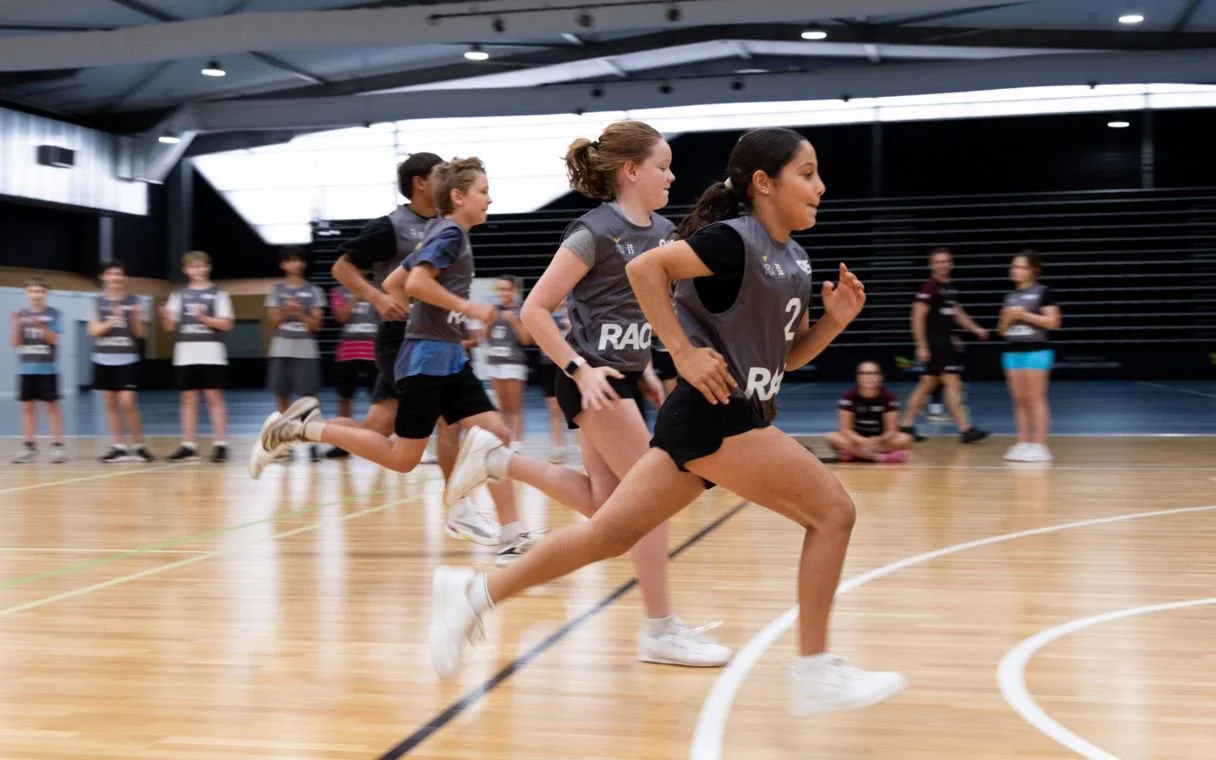
Your young athlete probably already has a team around them.
A coach helping them improve their skills.
A strength program helping them get stronger.
Good nutrition helping them fuel.
Sleep helping them recover.
Warm-ups, mobility work and recovery sessions helping their body prepare for the next challenge.
Chiropractic can be another tool in that toolbox.
And importantly, it doesn't have to be something you only think about once they're injured.
At LFC, one of the reasons we love working with young athletes is that we can look at how their body is moving and coping with the demands of their sport, not simply where it hurts.
Sport Asks A Lot From Their Joints
Running, jumping, tackling, kicking, throwing, lifting, twisting and rapidly changing direction all require movement through multiple joints at once.
Very rarely does one joint work alone.
Think about a footballer kicking.
The supporting ankle needs to stabilise.
The hip needs to move.
The pelvis and trunk need to rotate and control that rotation.
The spine needs to move.
The kicking leg needs to accelerate and then decelerate.
The brain has to coordinate all of that in a fraction of a second.
Now repeat it hundreds of times across training and games.
When one area isn't moving as freely as it normally does, the body is incredibly good at finding another way.
That ability to adapt is useful, but we don't necessarily want an athlete continually relying on the same compensation.
That's where regular movement assessments can be valuable.
Where Chiropractic May Help
Chiropractic care can form part of an athlete's overall approach to maintaining joint mobility and physical function.
At LFC, we're looking at questions such as:
Are their joints moving well?
Are there areas becoming consistently restricted?
Are they compensating somewhere else?
Is there a difference between their left and right sides?
Are there movements their sport requires that they're struggling to access?
Is their body coping with their current training load?
An adjustment may be used when appropriate to help improve movement in joints that aren't moving as well as we'd like.
But then we want to take the next step.
Because improving movement is useful.
Teaching the body what to do with that movement is even better.
That's where mobility work, strength exercises, balance, control and sport-specific movement can come in.
It's why the LFC approach is:
RESTORE. TEACH. BUILD.
Restore movement.
Teach the athlete how to use it.
Build the strength and capacity to keep it.
Chiropractic and Recovery
Recovery doesn't mean lying on the couch until the next training session.
It's the period where the body responds and adapts to the work it has just done.
After hard training or competition, it's normal for athletes to feel tired, stiff or sore. But when the training schedule is relentless, sometimes those little restrictions and areas of tightness start accumulating.
That's where chiropractic can be used as one part of an athlete's recovery strategy.
We can assess how they're moving after periods of heavy training or competition, identify areas that may not be moving as well and address joint restrictions where appropriate.
For the athlete, that may help them feel like they're moving more freely and give them a better starting point for their mobility, strengthening and recovery work.
But an adjustment doesn't replace recovery.
They still need:
quality sleep
adequate food and hydration
appropriate rest
mobility and active recovery
strength and conditioning
sensible training loads
Think of chiropractic as another piece of the recovery puzzle, rather than the whole puzzle.
What About Performance?
This is where we need to change the way we think about chiropractic and sport.
The goal isn't:
“Get adjusted and you'll run faster.”
Performance is far more complicated than that.
But good athletic performance relies on the body being able to access the movement required for the task.
A basketballer needs ankle and hip mobility to squat, jump and land.
A swimmer needs movement through their shoulders and upper back.
A footballer needs hip movement, rotation, balance and single-leg control.
A tennis player needs rotation through the hips, trunk, upper back and shoulder.
A runner repeatedly moves through the ankles, knees, hips and pelvis thousands of times.
If an athlete is restricted somewhere, their body may find another way to complete the movement.
So rather than thinking of chiropractic as something that creates performance, we see it as one tool that can help support the movement that performance requires.
Then we build on that movement with strength, control, skill and repetition.
Movement + Strength + Skill + Recovery
That's the bigger picture.
A young athlete isn't going to reach their potential because of one adjustment.
Just like they aren't going to reach it because of one gym session, one good night's sleep or one healthy meal.
Performance comes from consistency across all of these areas.
Their coach develops their skills.
Their strength program develops capacity.
Their nutrition fuels the work.
Their sleep allows recovery.
Their training creates adaptation.
And chiropractic can help support how well their body is moving throughout that process.
For a young athlete training several times every week, that can make chiropractic a useful addition to the team around them, rather than something they only turn to once they're already sitting on the sidelines.
Fuel Their Sport With Real Food

Your young athlete can work on their mobility, strength, balance, coordination and recovery but their body still needs the raw materials to do the work.
And for most young athletes, those foundations don't need to come from protein powders, energy drinks, pre-workouts or expensive sports products.
Start with real, whole foods.
A growing teenager who is also training several times a week has a lot to fuel.
Their body needs energy for:
Growth and development.
School and concentration.
Hormones and normal body function.
Training and competition.
Muscle repair.
Recovery.
The harder and more frequently they train, the more important it becomes to make sure they're actually eating enough to support what they're asking their body to do.
Build Their Plate Around the Basics
Instead of getting caught up counting calories or obsessing over macros, start by looking at what's actually on their plate.
For a young athlete, most meals should contain a combination of:
CARBOHYDRATES - for fuel
Potatoes, sweet potato, rice, oats, wholegrain bread, pasta, quinoa, corn and fruit.
Carbohydrates are particularly important for athletes participating in running, sprinting, jumping and repeated high-intensity efforts.
They're not something young athletes should automatically be trying to avoid.
PROTEIN - for growth and repair
Eggs, chicken, beef, lamb, fish, Greek yoghurt, milk, cheese, lentils, beans, chickpeas and tofu.
Rather than eating very little protein all day and then having an enormous steak at dinner, aim to include a source of protein across meals and snacks.
COLOUR - for the nutrients their body needs
Fruit and vegetables provide fibre and a huge variety of vitamins, minerals and plant compounds.
Different colours provide different nutrients, so encourage variety:
Berries, Bananas, Kiwi fruit, Oranges, Apples, Leafy greens, Carrots, Capsicum, Tomatoes, Broccoli, Pumpkin.
HEALTHY FATS
Avocado, nuts, seeds, extra virgin olive oil, eggs and oily fish
can also form part of a balanced young athlete's diet.
The goal isn't a “perfect” diet.
It's giving their growing, training body quality food consistently.
The Day Before Competition
The day before a game shouldn't require a special sports diet.
Instead, think:
Whole foods + enough carbohydrates + quality protein + plenty of colour + fluids.
And most importantly:
Don't let them accidentally under-eat all day.
Here's what a whole-food day before competition might look like.
BREAKFAST
Porridge made with rolled oats and milk
Top with:
Banana
Berries
Greek yoghurt
Chia seeds
A drizzle of honey
Plus water.
This gives them carbohydrates for energy, protein and a range of micronutrients.
MORNING TEA
Greek yoghurt + banana + berries + handful of nuts
Boiled eggs + fruit
Apple + natural peanut butter
Simple food. Easy to prepare. No sports product required.
LUNCH
Chicken rice bowl
Grilled chicken
Rice
Avocado
Cucumber
Carrot
Capsicum
Spinach
Extra virgin olive oil
Add a piece of fruit afterwards if they're still hungry.
AFTER SCHOOL
This is an important one.
A sporty teenager who ate lunch at 12:30pm and doesn't have dinner until 7:00pm shouldn't necessarily be expected to run on empty all afternoon.
Banana smoothie
Milk
Greek yoghurt
Banana
Berries
Rolled oats
Natural peanut butter
Or:
Eggs on wholegrain toast + fruit.
DINNER THE NIGHT BEFORE
Dinner doesn't need to be an enormous bowl of plain pasta.
Give them a normal, balanced meal with a generous whole-food carbohydrate source.
OPTION 1 — Beef & Potato
Lean beef
Roasted potatoes
Pumpkin
Broccoli
Carrots
Olive oil
OPTION 2 — Chicken & Rice
Chicken
Rice
Roasted or stir-fried vegetables
Avocado
OPTION 3 — Homemade Bolognese
Lean beef mince
Tomato-based sauce with vegetables
Pasta
Side salad
GAME DAY
Let's use a 2:00 pm game as an example.
We want to gradually fuel them across the morning rather than trying to cram everything in immediately before they play.
8:00 AM — BREAKFAST
Porridge bowl
Rolled oats cooked with milk
Banana
Berries
Greek yoghurt
Honey
Eggs & Toast
Eggs
Wholegrain toast
Avocado
Banana or another piece of fruit
Plus water.
10:30–11:00 AM — PRE-GAME MEAL
As competition gets closer, keep the meal familiar and relatively easy to digest.
Chicken & Rice
Chicken
White or basmati rice
A smaller amount of cooked vegetables
Eggs & Potato
Eggs
Roasted or boiled potato
Fruit on the side
Simple Chicken Sandwich
Good-quality bread
Chicken
Small amount of salad
Piece of fruit
Whole foods don't have to mean huge amounts of fibre immediately before exercise.
Some athletes find large salads, lots of legumes, very fatty meals or huge quantities of vegetables uncomfortable before competing.
Game day is about finding the whole foods that your teenager digests well.
60–90 MINUTES BEFORE
If they're hungry or need a final carbohydrate top-up, keep it really simple.
Fruit is one of the easiest options.
Banana
Dates
Orange
Watermelon
Apple
A banana with a small amount of honey can also work well.
At this point, you don't need to give them another full meal.
AFTER THE GAME — NOW WE RECOVER
Once the game finishes, we're looking to replenish energy, provide protein and replace fluids.
REAL FOOD CAN DO THE JOB.
If dinner isn't far away, that could simply be:
Banana + Greek yoghurt + milk
followed by dinner.
Or make a whole-food smoothie using:
Milk
Greek yoghurt
Banana
Berries
Oats
Natural peanut butter
Then follow it with a proper meal later.
Dinner could be:
Steak + potatoes + vegetables
Chicken + rice + vegetables
Salmon + sweet potato + salad
Homemade beef burrito bowl with rice, avocado and vegetables
Simple.
Hydration Doesn't Need to be Fluorescent
For most everyday training and sporting situations, water should be the foundation.
Encourage your teenager to drink regularly throughout the day rather than turning up dehydrated and trying to fix it immediately before the game.
Milk, fruit and vegetables also contribute fluid and nutrients.
For prolonged, intense exercise, tournaments, very hot conditions or athletes with high sweat losses, carbohydrate and electrolyte replacement may sometimes be useful — but that doesn't mean every teenager needs a sports drink every time they train.
Better options for your family
Try a simple homemade sports drink:
500–750 mL water
Juice of ½ a lemon or lime
1–2 teaspoons honey
A small pinch of salt
The water replaces fluid, the salt provides sodium and the honey provides some easily available carbohydrate.
For a harder or longer event where more carbohydrate is needed, the amount of honey or juice may need to be higher, there's no need to make every hydration drink ultra-low-sugar when that carbohydrate is being used to fuel prolonged exercise.
Coconut water
Coconut water can be another option because it naturally contains potassium and some carbohydrates.
However, it's relatively low in sodium compared with what we lose through sweat, so for a long, hot or sweaty sporting event, coconut water alone may not be the ideal electrolyte replacement.
Pair it with food containing some salt, or add a small pinch of salt if appropriate.
Food is Part of their Training
A young athlete's body can't continually give more than it's receiving.
If we're asking them to:
Train harder.
Get stronger.
Run faster.
Recover quicker.
Concentrate at school.
Compete on weekends.
And continue growing...
we need to give their body the resources to do it.
That's why nutrition belongs alongside everything else we've spoken about in this blog.
MOVEMENT + STRENGTH + BRAIN-BODY COORDINATION + FOOD + SLEEP + RECOVERY.
They're not separate conversations.
They're all part of building a resilient young athlete.
And just like their sporting performance, those foundations are built one day at a time.
Don't Wait Until They Can't Play
This is perhaps the biggest message we want parents to take away.
Your sporty teenager doesn't necessarily need to be injured before you start paying attention to how their body is coping.
If they're regularly saying:
“My hamstrings are always tight.”
“My back gets stiff after training.”
“This hip doesn't move like the other one.”
“My shoulder always feels tight after I throw.”
“My knee isn't really sore… it just doesn't feel right.”
Those are useful conversations to have.
It doesn't automatically mean something is wrong.
But it may be worth assessing their movement, looking at their training load and considering whether something needs to change.
Because sometimes the best time to look after a young athlete isn't when they're injured.
It's while they're still doing what they love.
Training the Brain as Well as the Body
Strength training develops muscles.
Skills training develops the athlete.
But there is another part of performance we don't want to forget:
The brain needs training too.
Every time your teenager runs across an uneven surface, balances on one leg, catches a ball, changes direction or reacts to another player, their brain is taking in enormous amounts of information and deciding what their body needs to do next.
That information comes from several systems working together, including:
Proprioception: information from the muscles and joints about where the body is in space.
The vestibular system: the balance system within the inner ear that helps the brain understand head movement, acceleration and orientation.
Vision: helping the athlete track their environment, judge distance and respond to what's happening around them.
The brain has to take all of that information, make sense of it and coordinate an appropriate movement response.
That's why at LFC we don't only think about how strong an athlete is.
We're also interested in how well they can control and coordinate the body they've built.
Balance is Much More Than Standing on One Leg
Balance might sound basic compared with sprint training or lifting weights, but think about how often athletes actually need it.
A footballer gets bumped while kicking.
A netballer lands on one leg.
A basketballer changes direction while another player makes contact.
A runner hits an uneven patch of ground.
A tennis player reaches outside their normal base of support and has to recover quickly.
Their brain has to recognise the change and organise an appropriate response.
That's why balance and proprioceptive exercises can be valuable additions to a young athlete's training.
Depending on the athlete, this might include:
single-leg balance
unstable-surface exercises
balance with head or eye movements
catching or throwing while balancing
single-leg strength exercises
jumping, landing and sticking the landing
multidirectional movement
cross-body coordination exercises
reaction and change-of-direction drills
progressing from predictable to more unpredictable movements
And just like strength training, balance needs progression.
Standing on one leg for 30 seconds might be useful initially.
But sport isn't played standing still with your eyes fixed on the wall.
Eventually we want to challenge the athlete to move, react, reach, catch, turn, land and make decisions while maintaining control.
What About Primitive Reflexes?
This is another area we may explore when it is relevant to the individual athlete.
Primitive reflexes are automatic movement responses that are present early in life and play an important role during infancy and early development. As the nervous system matures, these early reflex patterns are normally integrated as more sophisticated voluntary movement and postural control develop.
In some neurological and developmental assessment approaches, practitioners may assess whether particular reflex-like movement patterns appear to persist or interfere with a person's movement and coordination.
For an athlete, we're not looking for a reflex simply because they're tight, injured or not performing well.
And we don't assume that a primitive reflex is the cause of a sporting problem.
Instead, if something in their history, coordination or movement assessment gives us a reason to look further, reflex assessment may form one small part of the bigger picture.
Where appropriate, exercises may then be used to challenge things such as:
Cross-body coordination.
Balance.
Eye and head movement.
Body awareness.
Rhythm and timing.
Motor control.
The goal isn't simply to make them stronger.
It's to challenge the nervous system and body to work together more effectively during increasingly complex movement.