

Why Am I So Stiff?
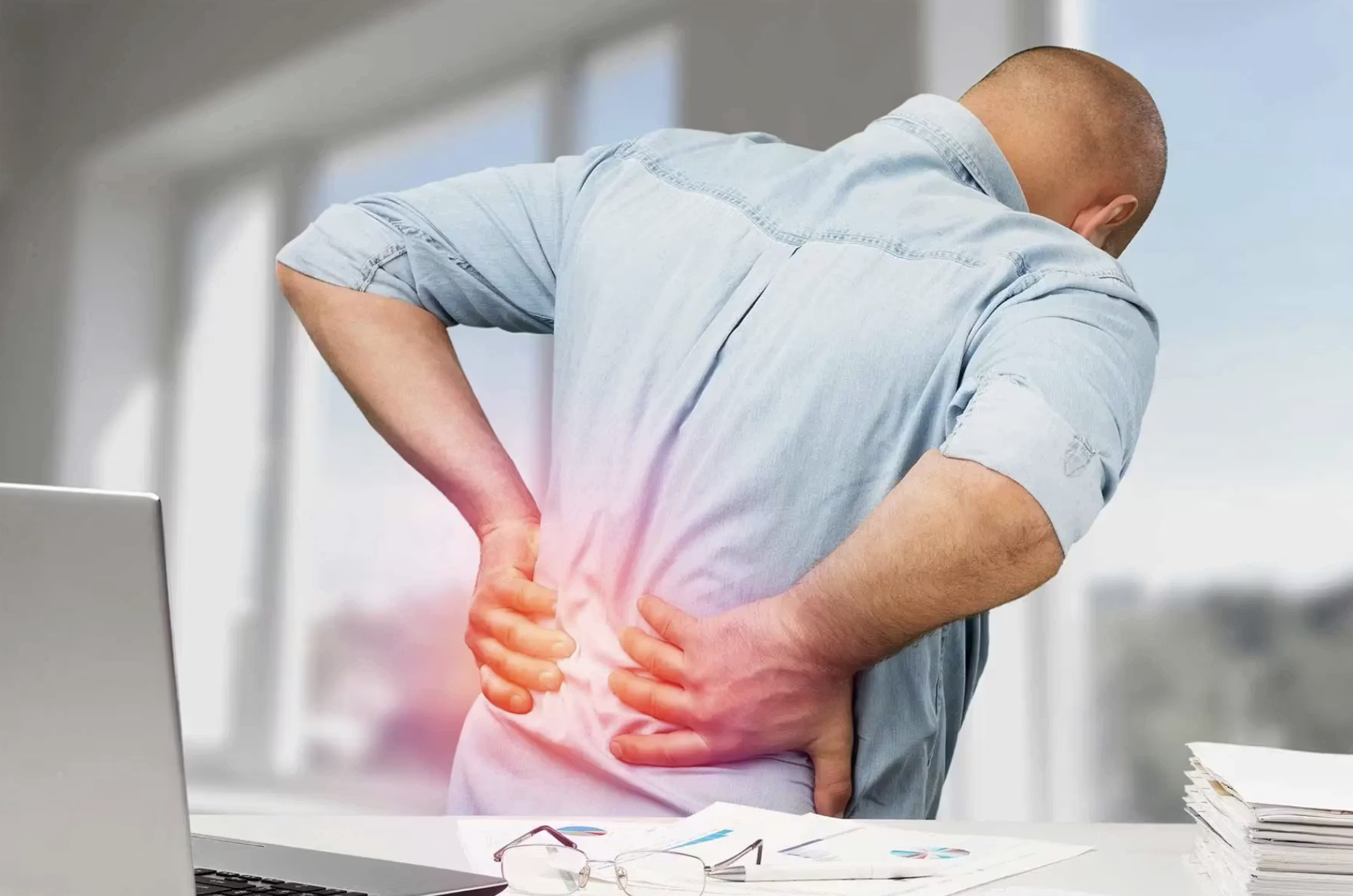
What Your Body Is Trying to Tell You About Mobility, Ageing & Spinal Health
"I'm just getting old."
"I used to be able to do that."
"I can't sit on the floor anymore."
"Every morning I wake up stiff."
"I have to hold onto something to put my socks on."
"I can't turn my head properly when I'm driving."
"My back just feels tight all the time."
"Once I get moving I'm okay... it just takes a while."
"I used to be flexible."
Do any of these sound familiar?
They're some of the most common things we hear from patients every day.
The surprising part?
Many people believe these changes are simply a normal part of getting older.
While our bodies naturally change with age, losing mobility doesn't have to happen nearly as quickly as many people think.
In fact, one of the biggest reasons we become stiff isn't because we've had too many birthdays, it's because we've gradually stopped moving the way our bodies were designed to.
Think About How Children Move...
Have you ever watched a young child play?
They squat effortlessly, crawl under tables, climb over furniture, sit cross-legged on the floor, roll around, jump, twist, reach, climb, hang, skip and move in ways that would leave many adults sore just thinking about it.
Children don't exercise to stay mobile—they simply move.
Every day they're taking their joints through hundreds of different positions and ranges of motion without even thinking about it. Their bodies are constantly exploring, adapting and learning.
Now think about the average adult.
Imagine if your knees only bent a few times each day. Or if you never reached your arms above your head. Eventually those movements would become difficult—not because your body is broken, but because it simply hasn't practised them.
The same thing happens with your spine.
Modern life has quietly taught us to sit, stand and sleep in the same positions over and over again. Without realising it, we've stopped asking our joints to do what they were designed to do.
School desks become office desks.
Hours spent playing on the floor become hours spent in the car.
Work has us standing in one place all day or sitting behind a computer.
Even our downtime often involves sitting on the couch or looking down at our phones.
Before we know it, our bodies have gone from moving in every direction imaginable to repeating the same few positions day after day.
We've become incredibly good at moving in one or two directions—but we've forgotten about all the others.
Our world has become very one-dimensional.
And our joints begin to notice.
The result?
We gradually lose the freedom to move, leaving us feeling stiff, tight, sore and less capable of doing the things we once found easy.
"Your body doesn't stop moving because you get older—you often feel older because you've stopped moving."
Your Body Was Designed to Move
Every joint in your body has a purpose.
Your spine bends forward, backward, sideways and rotates.
Your hips are designed to squat, twist and move through large ranges of motion.
Your shoulders should comfortably reach overhead, behind you and across your body.
Your ankles, knees, wrists and neck all rely on regular movement to stay healthy and adaptable.
When joints aren't regularly taken through their available movement, the surrounding muscles, ligaments, fascia and connective tissues begin to adapt. Over time they become less flexible, less resilient and more resistant to movement.
The old saying really is true:
"If you don't use it, you lose it."
This gradual loss of mobility often happens so slowly that many people simply accept stiffness as part of everyday life.
But mobility isn't just about being flexible.
It's about giving your body the freedom to move efficiently, comfortably and confidently.
Why Mobility Matters for Your Spine and Nervous System
Your spine is much more than a stack of bones.
It protects your spinal cord—the communication highway between your brain and body—and is designed to move in multiple directions while providing both movement and stability.
Every time a joint moves, thousands of tiny sensory receptors within that joint send information to your brain.
Your brain uses this information to answer important questions like:
Where am I in space?
Am I balanced?
Which muscles need to switch on?
How much force do I need to produce?
This constant feedback helps your body coordinate posture, movement, balance and stability without you even thinking about it.
When joints become stiff or don't move well, the quality of this information can change. Over time, this may contribute to altered movement patterns, increased muscle tension and unnecessary strain on other areas of the body.
Modern life, however, often places the spine into only a handful of positions:
Sitting at a desk
Sitting in the car
Standing in one place
Sleeping
Looking down at phones and tablets
Our bodies become incredibly good at these positions—but not much else.
The less variety of movement we experience, the less adaptable our joints become.
💡 Did You Know?
Research suggests that many adults spend more than half of their waking day sitting or being sedentary. Over time, spending long periods in the same positions may contribute to reduced joint mobility, muscle weakness and a decline in overall physical function.
Your body thrives on movement—and the more movement variety you give it, the better equipped it is to stay mobile, strong and resilient.
This is one of the reasons chiropractic care places such an emphasis on restoring healthy movement. Before we can expect the body to move well, we first need to identify where movement has been lost and help those joints move more freely again.
How Poor Mobility Can Affect Everyday Life
When one joint stops moving well, another part of the body often has to compensate.
Over time this may contribute to:
Neck tension
Headaches
Upper back stiffness
Lower back discomfort
Hip and pelvic tightness
Shoulder restrictions
Feeling stiff after sitting
Reduced balance and coordination
Difficulty exercising comfortably
Poor posture and altered movement patterns
Fatigue from everyday activities
Many people don't realise how much extra work their body is doing simply to compensate for restricted movement.
Sometimes the discomfort isn't coming from the area that's hurting—it may be the result of another part of the body no longer moving the way it should.
That's why at Langwarrin Family Chiropractic, we don't just look at where you feel discomfort—we look at how your whole body is moving.
The Six Movements Your Spine Was Designed to Do
Your spine wasn't designed to stay in one position all day.
It's designed to move.
Every single day your spine should comfortably move through six basic directions:
✔️ Look up (extension)
✔️ Look down (flexion)
✔️ Bend to the left
✔️ Bend to the right
✔️ Turn to the left
✔️ Turn to the right
Why not try them now?
Take just one minute and slowly move your neck and back through each of these six movements.
Don't force anything.
Simply notice what you feel.
Ask yourself:
Does one side feel stiffer than the other?
Is one movement easier than another?
Do you notice pulling, tightness or restriction?
Is there a movement you've subconsciously stopped doing because it doesn't feel comfortable?
Can you move smoothly, or do you feel like your body is "catching" in certain places?
Many people are surprised by what they discover.
Without realising it, we often stop moving into positions that feel restricted or uncomfortable.
The body is incredibly clever.
If one joint isn't moving as well as it should, another area quietly starts doing extra work instead.
At first this compensation is helpful.
Over months or years, however, those compensations become your new normal.
Muscles become overworked.
Other joints begin taking on more stress.
And gradually, the stiffness you've been putting up with starts affecting more of your everyday life.
Many people don't realise how much movement they've lost until they compare one side with the other.
When Mobility Feels Uneven
It's completely normal to have small differences between your left and right sides.
However, if one side consistently feels much tighter, one movement is noticeably harder than another, or you simply don't feel like your body moves as freely as it once did, it may be worth having your movement assessed.
At Langwarrin Family Chiropractic, one of the very first things we assess is how your body moves.
Rather than simply focusing on where you feel discomfort, we look at how your spine, pelvis and other joints are working together.
We assess joint mobility, movement patterns and spinal function to identify areas that may not be moving as efficiently as they should.
When appropriate, chiropractic adjustments are used to help restore movement to joints that have become restricted.
As joint mobility improves, the muscles surrounding those joints often don't have to work quite so hard to compensate, making movement feel easier and more natural.
Many patients also find that once their joints are moving better, they're able to perform their mobility exercises more comfortably and confidently.
Think of chiropractic adjustments as helping to restore movement, while your mobility exercises help your body keep that movement.
The two work hand in hand.
Combined with simple strengthening exercises and healthy movement habits, this approach aims to help your body become more resilient over time.
Five Simple Mobility Exercises You Can Start Today
The good news?
Your body is incredibly adaptable.
Mobility is something you can improve at almost any age.
You don't need to spend an hour stretching every day.
Even 5–10 minutes of intentional movement can make a noticeable difference over time.
Remember...
Mobility isn't about stretching as far as you possibly can.
It's about gently taking your joints through the movements they were designed to perform.
1. Cat-Cow
Purpose: Mobilises the entire spine through flexion and extension (forward and backward movement).
How to do it:
Start on your hands and knees with your hands directly under your shoulders and your knees under your hips.
Slowly round your back towards the ceiling while gently tucking your chin towards your chest.
Reverse the movement by allowing your tummy to lower, lifting your chest and looking slightly upwards.
Continue moving slowly and smoothly between each position.
Repetitions: 10–15 slow repetitions.
Watch out for:
Moving too quickly.
Holding your breath.
Forcing into painful positions.
2. Open Book Rotations
Purpose: Restores rotation through the upper back and rib cage while helping reduce stiffness from prolonged sitting.
How to do it:
Lie on your side with your knees bent to approximately 90 degrees.
Stretch both arms straight out in front of you.
Keeping your knees together, slowly rotate your top arm across your body until your chest opens towards the ceiling.
Follow your hand with your eyes before returning to the starting position.
Repetitions: 8–10 each side.
Watch out for:
Allowing your knees to lift off the floor.
Twisting through your lower back instead of your upper back.
Rushing the movement.
3. 90/90 Hip Rotations
Purpose: Restores hip internal and external rotation—one of the first movements many adults gradually lose.
How to do it:
Sit on the floor with one leg bent in front of you and the other behind you, both at approximately 90 degrees.
Sit up tall through your spine.
Lean gently over your front leg until you feel a comfortable stretch through your hip.
Return to the middle, then slowly rotate both legs to the opposite side.
Use your hands for support if needed, aiming to rely on them less over time.
Repetitions: 6–8 slow transitions each side.
Watch out for:
Slouching through your lower back.
Forcing your knees towards the floor.
Bouncing through the movement.
4. Supported Deep Squat Hold
Purpose: Encourages healthy movement through the ankles, knees, hips and lower back while improving lower body mobility.
How to do it:
Hold onto a sturdy bench, table or door frame for support.
Slowly lower yourself into a comfortable squat.
Keep your heels on the floor where possible.
Relax into the position while taking slow, controlled breaths.
Hold: 20–30 seconds.
Watch out for:
Heels lifting excessively.
Allowing your knees to collapse inward.
Forcing yourself lower than feels comfortable.
5. World's Greatest Stretch
Purpose: Improves mobility through the hips, hip flexors, hamstrings, upper back and shoulders—all in one movement.
How to do it:
Step your right foot forward into a deep lunge, keeping your left leg extended behind you.
Place your left hand on the floor inside your right foot.
Slowly rotate your upper body to the right, reaching your right arm towards the ceiling while following your hand with your eyes.
Hold for 2–3 seconds before returning your hand to the floor.
Return to the starting position and repeat on the opposite side.
Repetitions: 5–8 each side.
Watch out for:
Rushing through the movement.
Holding your breath.
Letting your front knee collapse inward.
Forcing the rotation beyond what feels comfortable.
A Final Tip
These exercises should feel like gentle movement, not a workout.
Aim to perform them slowly and consistently rather than trying to stretch as far as possible.
If you notice one side feels significantly stiffer than the other, or you're unable to perform some of these movements comfortably, it may be a sign that your joints and movement patterns would benefit from a more thorough assessment.
Remember, the goal isn't to force movement—it's to gradually restore it.
Keep Moving for Life
Mobility isn't reserved for athletes, gym-goers or yoga enthusiasts.
It's one of the foundations of healthy ageing.
Think about all the movements you perform every single day without giving them much thought:
Getting out of bed.
Looking over your shoulder while driving.
Picking up your child or grandchild.
Reaching into the top cupboard.
Walking the dog.
Gardening.
Playing sport.
Getting down onto the floor—and, just as importantly, getting back up again.
Every one of these activities relies on healthy, coordinated movement.
The more movement options your body has, the easier everyday life becomes.
Unfortunately, many of us don't notice we're losing mobility until everyday tasks start becoming harder.
We begin avoiding certain movements because they're uncomfortable.
We stop sitting on the floor because it's difficult to get back up.
We turn our whole body instead of our neck when reversing the car.
We ask someone else to lift the heavy box.
Without realising it, our world gradually becomes smaller.
The encouraging news is that our bodies are remarkably adaptable.
With regular movement, appropriate strengthening and, where needed, chiropractic care to help restore healthy joint mobility, it's often possible to improve the way your body moves and functions.
It doesn't happen overnight.
Just like mobility is gradually lost over time, it's gradually regained through consistent movement, good habits and appropriate care.
Small changes, repeated regularly, can make a remarkable difference.
Movement Is One of the Best Investments You Can Make
We often think about investing in our health by eating better or exercising more.
But investing in your mobility is just as important.
Healthy mobility helps you continue doing the things you love for longer.
It helps you stay active with your family.
It helps you remain independent as you get older.
It helps your body better adapt to the physical demands of work, sport and everyday life.
Perhaps most importantly, it gives you confidence in your own body again.
Because when your body moves well, life simply feels easier.
Don't Settle for "I'm Just Getting Older."
If you've noticed you're becoming stiffer, avoiding certain movements or feeling different from one side to the other, don't assume it's simply "part of getting older."
While our bodies naturally change with age, many movement restrictions develop because we've gradually stopped asking our joints to do what they were designed to do.
Sometimes all your body needs is the right environment to move well again.
At Langwarrin Family Chiropractic, we believe great movement is one of the foundations of great health.
That's why every assessment begins with understanding how your spine and joints are moving—not just where you feel discomfort.
We take the time to assess your posture, joint mobility and movement patterns to identify areas that may not be functioning as well as they could.
From there, we create a personalised plan that may include chiropractic adjustments, mobility exercises, strengthening advice and practical lifestyle recommendations to help you move with greater ease and confidence.
Our goal isn't simply to help you feel better today.
It's to help your body move well for years to come.
Your Next Step
If this blog has made you realise that your body isn't moving the way it used to, don't ignore it.
Take five minutes today to work through the mobility exercises we've shared.
Notice how your body feels.
Pay attention to any movements that feel restricted, uneven or uncomfortable.
If you're finding certain movements difficult, one side feels noticeably stiffer than the other, or you'd simply like to understand how well your body is moving, we'd love to help.
A thorough chiropractic assessment can identify areas of reduced mobility, explain what's contributing to those restrictions and provide a personalised plan to help you move more freely again.
Because when you move well, you live well.
The goal isn't just to live longer. It's to keep moving well while you do.